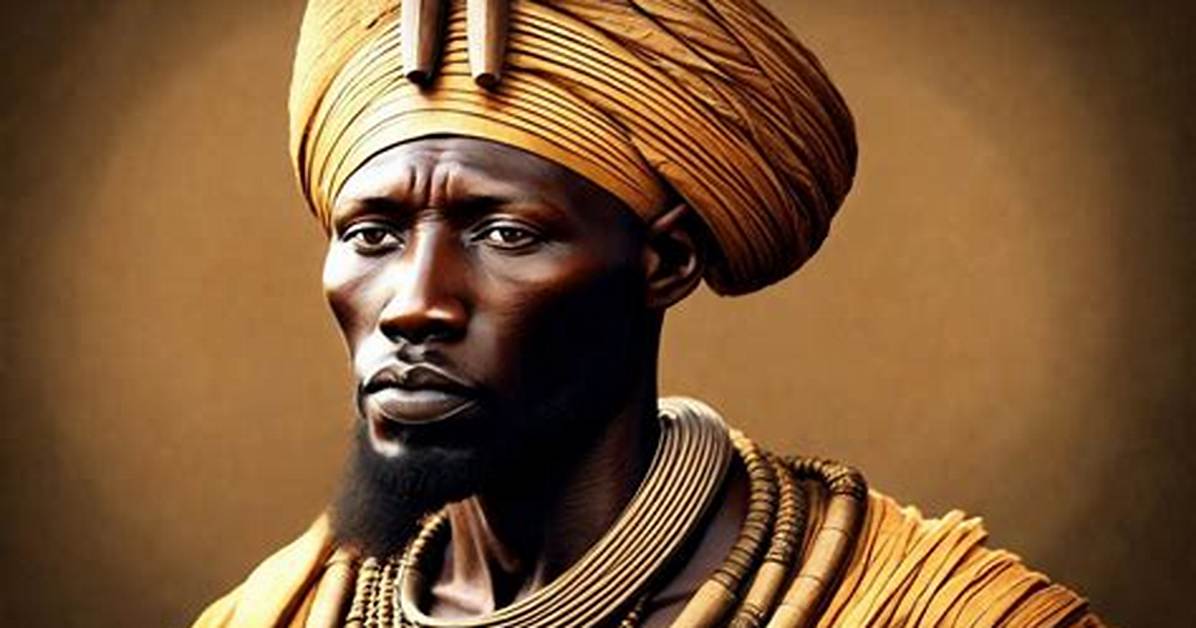
Niane alludes to Sundiata being a Muslim. According to Fage, there is nothing in the original epos that supports the claim. Sundiata is regarded as a great hunter and magician whose subjects predominantly adhered to traditional beliefs and so did Sundiata, in order to gain their favors. Others claim that Sundiata was a Muslim with syncretism practices. Sundiata Keita’s son, adopted sons and brother all had Muslim names, suggesting that he was at least a nominal Muslim, who may have complied with followers of the traditional religion to gain their favor and loyalty.
However, many of Sundiata’s successors, including his son Uli Keita I of Mali, were Muslims, Mansa Musa Keita being one of the most celebrated.
In the epic of Sundiata, Sundiata claims “an ancestral origin among the companions of Muhammad in Mecca” (namely, Bilal Ibn Rabah) and speaks of himself as a successor to Dhu al-Qarnayn, a conqueror king mentioned in the Quran, and believed to be Alexander the Great. In exile, Sundiata learns about Islam when he travels to the city of the Cissés, and returns wearing Muslim robes. It is mentioned that there was “only one mosque” in Niani, Sundiata’s hometown, but we can also see the invocation of “Allah Almighty” by Sundiata’s mother, indicating that Islamic terms, at least, were known. Although it is unknown whether Sundiata was actually Muslim, it is clear that the epic of Sundiata was affected by what Ralph Austen calls “Islamicate” culture—that is, the integration of Islamic and Arab culture by inhabitants of the region, whether they are Muslim or not.

