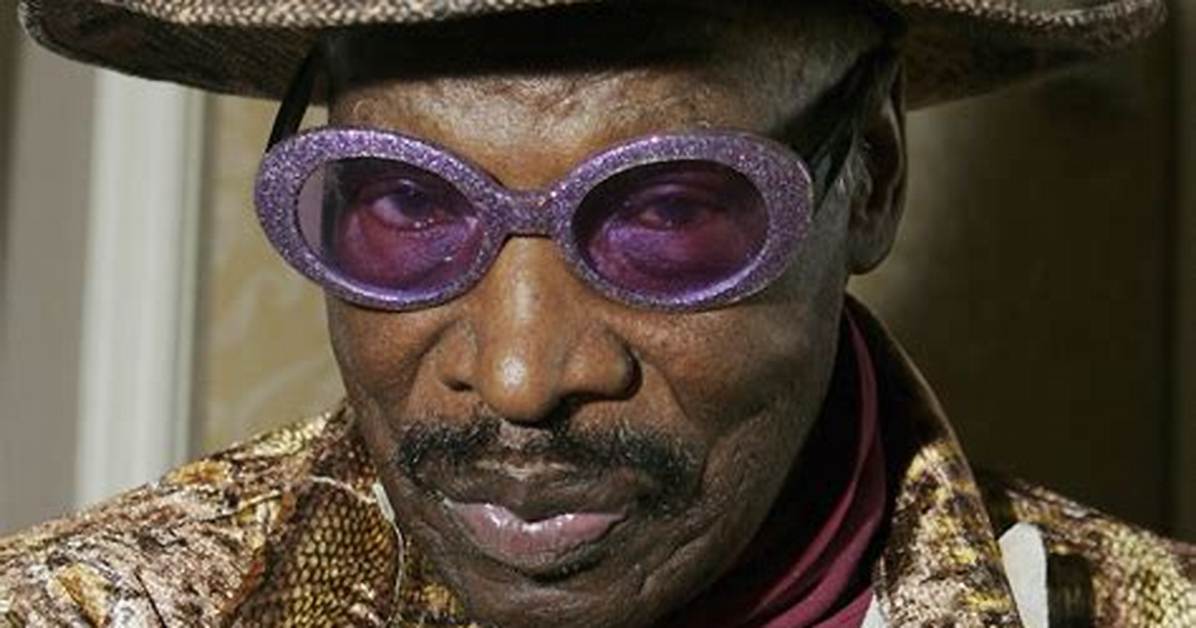
In 1970–71 he recorded three collections of material, Eat Out More Often, This Pussy Belongs To Me, and The Dirty Dozens, where “with jazz and R&B performers playing out of sight, [Moore] would recount boorish, explicitly unequivocal rhymes that regularly had to do with pimps, whores, players, and hawkers.”
Moore was affected by more standard celebrities, for example, Redd Foxx and Richard Pryor, just as by conventions, for example, the Dozens. The chronicles were normally made in Moore’s very own home, with companions in participation to give a gathering environment. The album covers and materials were frequently too shocking to even think about being put in plain view in record stores. However, the records ended up mainstream through verbal exchange and were exceptionally effective in impeded dark American people group, where his “twisted mind and defiant standpoint” were grasped.
Moore burned through the vast majority of his income from the records to fund the motion picture Dolemite, which showed up in 1975 and has been depicted as “one of the incredible blaxploitation motion pictures” of the 1970s. The character was “a definitive ghetto saint: an awful buddy, profane, gifted at kung-fu, dressed to murder and never going to budge on shielding the network from wickedness threats. He was a pimp with a kung-fu-battling inner circle of whores and he was known for his sexual ability.”
The film was fruitful and was trailed by The Human Tornado, The Monkey Hustle, and Petey Wheatstraw: The Devil’s Son-in-Law. Moore kept on discharging collections that spoke to his suffering fanbase through the 1970s and 1980s, however little of his work arrived at the standard white group of spectators.
Simultaneously, Moore frequently talked in his congregation and normally took his mom to the National Baptist Convention. He said: “I wasn’t stating messy words just to state them… It was a type of workmanship, outlines in which I created ghetto characters who reviled. I would prefer not to be alluded to like a filthy elderly person, rather a ghetto expressionist.”
He came to be viewed as a significant impact by numerous later rap stars. Snoop Dogg stated: “Without Rudy Ray Moore, there would be no Snoop Dogg, and that is serious.” Moore showed up on Big Daddy Kane’s 1990 collection Taste of Chocolate and 2 Live Crew’s 1994 collection Back at Your Ass for the Nine-4. On a scene of Martin titled “The Players Came Home,” he showed up as himself in the Dolemite character. He likewise repeated his Dolemite character in an appearance on Snoop Dogg’s 1999 collection No Limit Top Dogg and Busta Rhymes’ When Disaster Strikes… what’s more, Genesis.
In 2000, Moore featured in Big Money Hustlas, a film made by and featuring the hip jump bunch Insane Clown Posse, in which he played Dolemite without precedent for more than 20 years. In 2006, Moore’s voice acted in the show Sons of Butcher, as Rudy in season 2.
In 2008, he repeated the character Petey Wheatstraw on the tune “I Live for the Funk,” which highlighted Blowfly and Daniel Jordan. This denoted the first run through Blowfly and Moore worked together on a similar record together, just as the 30-year commemoration of the motion picture Petey Wheatstraw; it was likewise the last recording Moore made before his demise.

